The year was 1975 when our 50 year honorees were first licensed to practice law. Read some of their stories below.
 Pictured left to right: Ralph DeNune, III; Jonathan B. Cherry; David L. Kuhl; Craig F. Frederickson; Stephen J. Stanford; Cormac B. DeLaney; Scott J. Saum; Ray A. Farris; Sheldon M. Slaybod; C. Craig Covrett; David J. Simko
50 MEMBER HONOREES:
Johnathan B. Cherry
Undergraduate School & Major: Bowling Green State University, History
Law School: University of Toledo
Why did you choose to become a lawyer?
After college I spent a year in Vietnam with the Army, then some time in industrial sales. I didn’t like either one much. I did okay on the LSAT and had the GI Bill benefits coming, so…
What is your fondest memory of practicing law?
My 12 years as bar counsel for the TBA. I got to work with a lot of very good people.
Who have you practiced with through the years?
In practice: Linde Webb, Ray Metzger, Dick & Ann Hamilton, Kurt Gottschalk, Joe Scalzo, Mark Geudtner, Harry Feldman, Paul Geller.
With TBA: Chris Parker, Dave Cooper, MIke Bonfiglio, George Gernot, Matt Rohrbacher, Rich MacMillan, Julie Wiley, Bonnie Rankin, Mike Manahan, Dave Grude, Patrick Cavanaugh, and many more.
What are your non-law related interests or activities?
Cycling, trying to remember where I put things.
Is there any advice you would like to pass along?
Keep your word and don’t mess with your trust account.
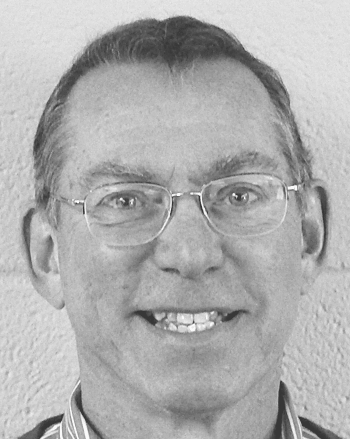
C. Craig Covrett
Undergraduate School & Major: University of Toledo, Business Administration Major
Law School: University of Toledo
Why did you choose to become a lawyer?
I was a 20 year old student at the University of Toledo College of Business Administration. I began wondering what life was all about. So I prayed this prayer; “God if the Bible is true and Jesus is alive today, then come into my life and change me and give me a direction and purpose for living and send someone into my life I can share my life with.” Five days later I met my wife Susan, on a blind date! God gave me direction, too. Nine months later I wrote this down: “My desire to work with people and serve people - I feel will be fulfilled by going into law.”
What is your fondest memory of practicing law?
Working with clients; helping them prepare their estate plans; then seeing the satisfied and relieved looks on their faces when those plans were completed.
Who have you practiced with through the years?
It was my privilege to have practiced with the following excellent lawyers who are consummate professionals: William Bingle, Judge Robert Christiansen, Scott Graeff, Martin Mohler and Joseph Wittenberg. I learned so much from each one.
What are your non-law related interests or activities?
Hiking with my wife of 55 years in the mountains of the National Parks out West; spending quality time with my family; community volunteer, serving in the ministry of Deacon in my church, gardening, genealogy, mentoring younger men, spending quality time with long time friends.
Is there any advice you would like to pass along?
Listen actively, show empathy, be honest and trustworthy avoid gossip and rumors, apologize, forgive, treat others as you want to be treated yourself, be grateful and trust and obey the Lord.
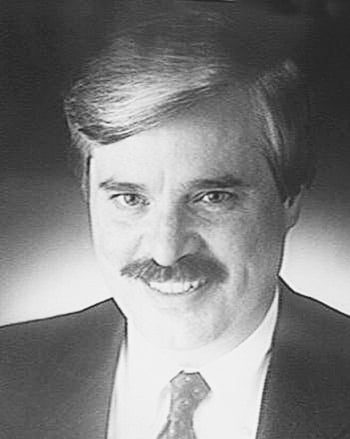
Cormac B. DeLaney
Undergraduate School & Major: John Carroll University, History
Law School: University of Toledo
Why did you choose to become a lawyer?
Ever since I was in grade school, I wanted to become a lawyer.
What is your fondest memory of practicing law?
Obtaining a defense verdict in Hancock County on August 3, 2013 in the case of The Estate of Ruth E. Kalmbach vs. Rodney S. Fizer. It was a wrongful death action where Mr. Fizer hit and killed a pedestrian.
Who have you practiced with through the years?
In 1975, I was hired by Thomas J. Manahan and John A. Pietrykowski at the firm Finn, Manahan & Pietrykowski. I have been with the firm ever since, which is now known as Manahan, Pietrykowski, DeLaney & Wasielewski.
What are your non-law related interests or activities?
I have been involved in fund-raising activities for St. Francis de Sales High School. After Terrance J. Degnan, a Toledo Bar Association member, died in 2004, we established a scholarship in his name at St. Francis. John Carey was instrumental in raising money. Many Toledo attorneys contributed. In one year, we were able to raise $140,000.00. The first scholarship recipient was Phillip Levering. Ironically, he received the scholarship on Terry’s birthday. In addition, I am an avid Notre Dame fan and season ticket holder.
Is there any advice you would like to pass along?
Remember, as an attorney, you are compelled to use your mind and imagination, for the real lawyer will see the horizon of opportunity and not be blinded by distraction.
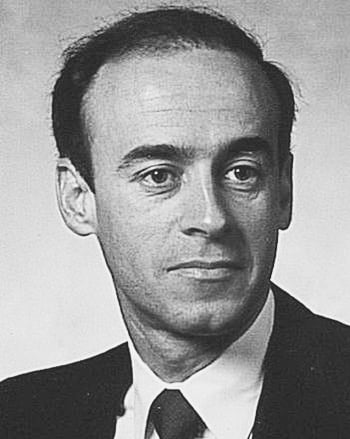
Ralph DeNune, III
Undergraduate School & Major: Ohio University, Communication for Business & Industry
Law School: University of Toledo
Why did you choose to become a lawyer?
My uncle was a lawyer and after talking with him over a period of time, I decided to become a lawyer.
What is your fondest memory of practicing law?
My fondest memories have to do with the lawyers I practiced with over the years.
Who have you practiced with through the years?
Law Firms: DeNune & Killam, McHugh.
DeNune and McCarthy, and
Lydy and Moan, Ltd.
What are your non-law related interests or activities?
Golf and physical fitness
Is there any advice you would like to pass along?
Toledo lawyers must continue the “Toledo Way” of practicing.
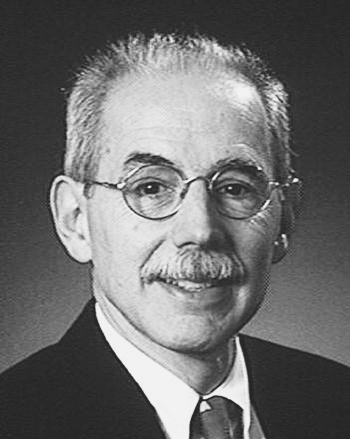
Thomas S. Douglas
Undergraduate School& Major: University of Toledo, BA
Law School: University of Toledo
Why did you choose to become a lawyer?
To Help/Assist, {Empowering} people from all walks of life work through many and varied issues.
What is your fondest memory of practicing law?
I have two: The first was when representing a couple seeking to adopt, I handed them their first (2 Day Old) child. The second was when as the result of a jury trial, my client who had been set-up and charged with aggravated robbery, was exonerated.
Who have you practiced with through the years?
Ralph DeNune, Jeff Lyon, Jim Moan, and Mike O’Donnell.
What are your non-law related interests or activities?
Reducing (Primarily Gun) violence & “supporting” victims of violence. Working with street gangs and related activities. Supporting and following University of Toledo Sports. Bike riding, walking, cooking.
Is there any advice you would like to pass along?
Always be honest and true to your principles, and your word. Always be asking about how you can be helpful. Listen first (to understand), then respond and if response is sought/appreciate.
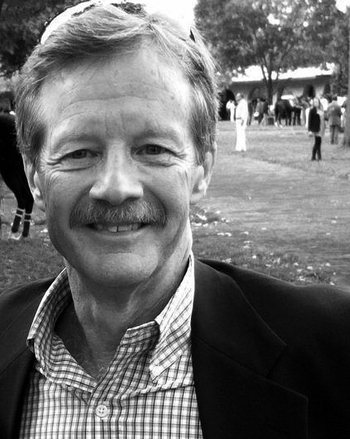
Ray A. Farris
Undergraduate School & Major: The Ohio State University, Economics & Math
Law School: Moritz College of Law at The Ohio State University
Why did you choose to become a lawyer?
Initially I was hoping to continue by 2-S student deferment during the height of the Vietnam War. I was drafted out of Law School anyway. The academic rigors and human nature challenges of Law School, and then in my practice, confirmed my choice to be a lawyer.
What is your fondest memory of practicing law?
Operating the Landmark Hotel and Casino in Las Vegas for Fuller & Henry Client Securities Investor Protection Corporation ( SIPC) during most of 1983, in the Bell & Beckwith bankruptcy caused by Ted Wolfram’s stock brokerage fraud.
Who have you practiced with through the years?
Fuller & Henry 1975-2006
Anspach, Meeks & Ellenberger 2006-2015
Solo since 2015
What are your non-law related interests or activities?
a) Volunteer Trail Patrol for Metroparks
b) Volunteering for the Homeowners Association in Waterside Monclova, where I live.
c) Playing pickle ball every chance I get.
d) Traveling
Is there any advice you would like to pass along?
“Keep breathing, because tomorrow the sun will rise. Who knows what the tide could bring.” (Tom Hanks’ character Chuck Noland in the movie Castaway)

Hon. Ruth Ann Franks
Undergraduate School & Major: Lindenwood College, Political Science & History
Law School: University of Toledo
Why did you choose to become a lawyer?
I grew up in a very turbulent time in America from the Civil Rights Movement, which challenged the inequities and discrimination based on race, to the Vietnam War, which resulted in the senseless loss of lives, as well as the corruption of the Nixon Presidency. These times greatly impacted me. Additionally, during this period, the Cold War existed and my father wanted me to actually see what the loss of freedom looked like. He took me to Russia and then Berlin, which was occupied by Russia. These experiences motivated me to want to promote fairness, equality, and the rule of law through becoming an attorney.
What is your fondest memory of practicing law?
My fondest memory was near the end of my career. In my final year on the Lucas County Common Pleas Court, I had set a pretrial hearing on a pro se administrative challenge of the removal by LMHA of a resident who was living in subsidized housing. The individual, who was not an attorney, had submitted outstanding legal arguments in support of granting a reversal of LMHA’s actions. At the hearing, the young lady appeared, as well as Doug Wilikins who represented LMHA. After asking her if she wrote the excellent brief in support of vacating the LMHA action, she said no, but her sister’s friend, who was with her in court, helped her write it. I told the young man that he had helped her write an excellent brief and he should go to law school. Subsequently, I had the privilege of helping him to attend law school, and he now is a practicing attorney.
Who have you practiced with through the years?
After passing the bar, I was hired by Lucas County Prosecutor, Harry Friberg, to be a trial attorney in the office. I had the privilege of working with Judge Mel Resnick and Judge Jim Bates before they became judges. I also was fortunate enough to work with Jim McCormick, Julia Bates, and many excellent criminal defense lawyers, which included Ronnie Wingate, Jeff Goldstein, Pete Wagner, and Pete Rost. As a judge, I marveled at the excellent Lucas County civil trial lawyers, such as John Barron, Cormac Delaney, Rudy Peckinpaugh, Ted Rowan, and so many other excellent trial attorneys. During my thirty years on the bench, I had the privilege to witness our Lucas County Bar members trying cases such as product liability cases, medical malpractice/wrongful death cases, as well as complicated criminal cases. I am so very proud of our Bar and what I learned over the years from all our Bar members.
What are your non-law related interests or activities?
Since retiring, I have moved to Tennessee with my two basset hounds to be closer to my son. I am living in a small Tennessee town where many of the country western singers live. It is not unusual to see these entertainers out and about in our small town. I have been blessed to make incredible friends down here who, just like me, have retired and elected to move to this area where I purchased a small house. We spend our time together visiting so many landmarks, beautiful gardens, vineyards, music venues, plays and breaking bread together. We also have a Book Club where we discuss selected books to read each month. However, I must confess that at our Book Club meetings, we also share a glass or two of wine and laughter and joy permeates our evenings together.
Is there any advice you would like to pass along?
My advice to the younger attorneys is to retire when he or she still can enjoy this incredible country. I did not retire until I was 71 years old, and if I had known how wonderful life can be away from my dedication to my professional life, I would have retired earlier. I still have my health and a clear mind (Some of you might disagree with that last statement) I am nearly 80 years old now, but when I look back, I have only fond memories of all of you and choosing to become an attorney.
Craig F. Frederickson
Undergraduate School & Major: Michigan State University, Political Science/Pre-Law
Law School: Northwestern University
Why did you choose to become a lawyer?
I wanted to be a doctor until my freshman year in high school when I had to deal with a dissected cat and frog. I changed my mind and focused on becoming a lawyer because I was impressed with historical and current heroes who were lawyers. I loved criminal law, but came to realize I was more prone to deal with families in estate planning and probate matters. I enjoyed people and found this practice satisfying.
What is your fondest memory of practicing law?
Numerous such memories. Had the opportunity to work with and meet many wonderful people both in my practice and serving in the Toledo Bar Association and Board of Governors of The State Bar Association.
Who have you practiced with through the years?
Began practice in Toledo with the firm known as Marshall, Melhorn, Bloch and Belt and became a partner in 1980. Ed Weber was my mentor and one of the finest people I have ever known. In 1981 became a partner with Julian Kaplin, Lynne Gressley and Jerry Parker- all former Marshall Melhorn attorneys. In 1991 established the firm of Frederickson & Heintschel with Tom Heintschel. Doug King later became a partner in what is now known as Frederickson, Heintschel & King.
What are your non-law related interests or activities?
In retirement I resigned from Boards that I was on. However, very busy hiking, canoeing, kayaking, and tent camping. Spend a couple hours a day exercising at the YMCA. Read a lot. Spend a lot of time at our cabin in Michigan. Took a riverboat cruise down the Columbia Rivers and signed up for one in the Puget in June.
Is there any advice you would like to pass along?
Be respectful of others, but don’t let anyone intimidate you. Always be true to yourself and do what you think is right. Don’t forget that time with your family is more important than anything else.
Thomas M. George
Undergraduate School & Major: Williams College, Economics
Law School: Case Western Reserve
Why did you choose to become a lawyer?
My dad told me early on that, given my apparent inability to tolerate office politics, I’d last in corporate life for maybe 20-30 minutes and therefore should consider law as outside counsel. As was the usual case, Dad was right.
What is your fondest memory of practicing law?
I was very lucky in that I was able to work with the same several business clients for virtually all 50 years. Many of the people that I was privileged to work with became, and remain, close friends.
Who have you practiced with through the years?
Fuller & Henry (1975-2005); RCO (2005-present). I also was fortunate to work closely with the various lawyers and leadership at Owens-Illinois, St. Lukes Hospital, Schindler Elevator Corporation, LOF and Brooks Insurance, all of whom made coming to work enjoyable and rewarding to me. I also am indebted to the people of RCO. It is an honor to be part of that group.
What are your non-law related interests or activities?
My principal, almost all consuming, interests are, in order, my family, our dogs, sailing and Cleveland’s professional sports teams (even the Browns).
Is there any advice you would like to pass along?
Focus on the things which are important to you, never lose sight of them and stay the course; the rest will take care of itself.
Robert J. Gilmer, Jr.
Undergraduate School & Major: Ohio Northern University, Political Science
Law School: University of Toledo
Why did you choose to become a lawyer?
I wanted a career that I believed would be professionally challenging, enjoyable and would provide a platform that would enable me to have a positive impact on my community.
What is your fondest memory of practicing law?
The many opportunities I had as both an assistant prosecutor and an attorney with Eastman & Smith to participate in interesting and challenging trials and complex cases.
Who have you practiced with through the years?
Lucas County Prosecutor’s Office: 1976-1980
Eastman & Smith: 1980-2024
What are your non-law related interests or activities?
Travel, primarily to New York City & Seattle to visit my sons and grandchildren and to my second home in Southwestern Virginia. When not traveling I enjoy playing golf with close friends.
Is there any advice you would like to pass along?
Remember that practicing law is a privilege and should be more than simply a job. Enjoy the opportunities to work with talented professionals, to help your clients and to give back to your community. Most importantly, have fun in your chosen profession.
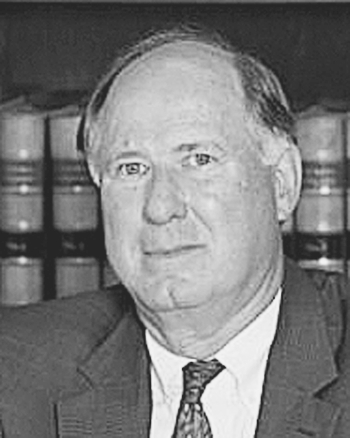
David L. Kuhl
Undergraduate School & Major: Loras College, Economics
Law School: University of Michigan (aka T.S.U.N.)
Why did you choose to become a lawyer?
Beginning in high school, I was intrigued by the law, driven primarily by my American Government class and later in college by my Constitutional Law and Political Science courses and excellent professors. Also, growing up in a small town in Iowa, I caddied for and was impressed by the town’s attorney ( yes, one) who had a successful practice and was held in high regard in the community.
What is your fondest memory of practicing law?
No single memory, but in general my fondest memories are:(1) successfully closing business transactions, especially when accompanied (back then) by nice closing dinners and camaraderie among the participants; and (2) advising family-owned companies and assisting them in their growth and success and, in many cases, ultimate sale.
Who have you practiced with through the years?
I am fortunate to have had a single job for the past 50 years (51, if you count my clerkship) with Eastman & Smith. Memorable attorneys include John Eastman, Jamille Jamra, Roger Smith, Bruce Smith, Pat Johnson (who offered me a clerkship position at the end of my interview in which it seems we talked about everything other than the practice of law), and Ron Tice.
What are your non-law related interests or activities?
Golf - My goal is to shoot my age, which I am committed to do even if it’s from the super senior tees!
Is there any advice you would like to pass along?
No advice, other than enjoy the ride (it’s much shorter than you might think), and be appreciative for our mentors, colleagues, and support staff ( I am grateful for my assistant Lee, who has been with me for over 30 years), and for the opportunities we are given.
Scott J. Saum
Undergraduate School & Major: The Ohio State University, Microbiology & Chemistry
Law School: University of Toledo
Why did you choose to become a lawyer?
My majors in college were Microbiology and Chemistry. I would do well in lectures, but not as well in labs. The reason was I would socialize too much around the lab. As a massive extrovert (wife’s terminology), I believed law might be a better career.
What is your fondest memory of practicing law?
I enjoyed getting to know and become friends with judges and fellow attorneys. I don’t believe that I did any of that for ulterior motives. The “camaraderie” was important to me and made me feel that I had arrived and was accepted. A few times in my career, clients gave me more in attorney fees that I billed! Of course, that made me feel appreciated. Finally – for now – I enjoyed using my Spanish with Spanish speaking clients. Although, I was third string behind Esteban Callejas and Jane Randall, if was satisfying.
Who have you practiced with through the years?
Howard Westin, Thomas Gruhler, James Hess, Charlie Rowell, Sol Zyndorf, Dwight Osterud – Honorable Judge Osterud (later), E.J. Leizerman, and John Pardee!
What are your non-law related interests or activities?
I am, and have been, a director on the board of Glass City F.C.U. along with fellow TBA member, Phil Browarsky. I played ice hockey into my forties, most notably, I might add, with a team called The Lawyers for several seasons. I raced sports cars from 1975 to 1990 with Sports Car Club of America and with Waterford Hills Road Racing Club (Formula Vee). I’ve enjoyed learning languages, both before my career and during my career, in particular Spanish and French. I’ve received court appointments in Spanish in Perrysburg Municipal Court, Wood County Common Pleas Court, and Lucas County Common Pleas Court with Judge Bates. I received one French speaking court appointment for a Haitian nurse who spoke standard French and (with great speed), Creole. That was challenging. Finally, I was a speaker at a CLE with the Real Estate Committee (TBA-TBR Presentation). All the presenters in my opinion did very well – a great success!
Is there any advice you would like to pass along?
Return all your phone calls daily. As a litmus test, if you have returned all of your calls faithfully, then you are probably on top of things!
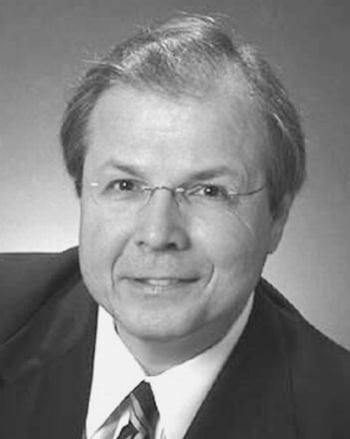
David J. Simko
Undergraduate School & Major: University of Toledo, Political Science, History, Economics
Law School: Capital University
Why did you choose to become a lawyer?
I went to Buckeye Boys State in my senior year of high school where I developed an interest in politics and law.
In college, that interest grew and saw both as a way to help people.
What is your fondest memory of practicing law?
The attorneys I have met, the clients I have represented and generally helping people.
Who have you practiced with through the years?
Ohio Attorney General’s Office, Lucas County Prosecutor’s Office, Arthur Wilkowski, Charles Bloom, Niepp & Wincart, Shindler, Neff, currently daughter and attorney Megan E. McNulty.
What are your non-law related interests or activities?
I have enjoyed Politics, serving on Community Boards and currently following our children’s careers and, of course, keeping up with all the grandchildren.
Is there any advice you would like to pass along?
Try to enjoy what you do.
Sheldon M. Slaybod
Undergraduate School & Major: University of Buffalo, Business
Law School: University of Toledo
Why did you choose to become a lawyer?
From a young age I wanted to be a lawyer.
What is your fondest memory of practicing law?
Being a partner with my wife.
Who have you practice with through the years?
Casey & Slaybod Partnership for 49 years.
What are your non-law related interests and activities?
Spending time with family and friends.
Sports
Traveling
Reading
Is there any advice you would like to pass along?
Try to make the world a better place.

Stephen J. Stanford
Undergraduate School & Major: The Ohio State University, Economics
Law School: The Ohio State University
Why did you choose to become a lawyer?
Prior to College, I participated in a school field day tour of Lucas County Common Pleas Court. I sat at one of the counsel tables, looked up at the bench, and decided I wanted to be a lawyer.
What is your fondest memory of practicing law?
Early in my career I won a case before the National Labor Relations Board that was treated by the Administrative Law Judge as 21 separate employment (i.e., discharge) discrimination cases. My client prevailed in each one of them. It was my first trial before the NLRB.
Who have you practiced with through the years?
30 years with Fuller & Henry, and 20 years with RCO.
What are your non-law related interests or activities?
Golf and Tennis
Is there any advice you would like to pass along?
I have told aspiring lawyers to pursue a technical undergraduate program (e.g., science, engineering, business, computers, accounting) instead of majors like English or political science. I still believe a technical background is more attractive to legal employers.
60 YEAR MEMBER HONOREES:
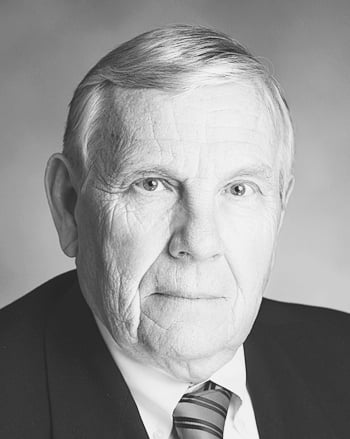
Richard F. Ellenberger
Undergraduate School & Major: Ohio Wesleyan University, History
Law School: The Ohio State University
Why did you choose to become a lawyer?
As an undergraduate history major I always was intrigued by the role lawyers played in the U.S. from the time of the founding fathers to the present.
What is your fondest memory of practicing law?
Many memories and stories. Initially, passing the bar, observing other veteran attorneys and concluding that I could do the work of a competent confident lawyer. During the many years there are satisfying memories of winning verdicts, successful appeals, complicated settlements and earning the respect of sometimes difficult judges. Certain cases or matters stand out, i.e. the “radish king,” the “illiterate multi-millionaire,” the “space heater incineration,” the “good ship lollipop,” and the only time I ever packed a courtroom, defending the “insane clown posse” in federal court.
Who have you practiced with through the years?
Doyle, Lewis and Warner 1965-2000
Anspach, Meeks, Ellenberger 2001-2023 (Inactive)
Multiple partners, associates, law clerks, client reps & counsel, court reporters as well as opposing attorneys and judges resulting in life long friendships.
What are your non-law related interests or activities?
Primary: Married 62 years, raising 4 successful children all with post grad degrees and 6 special grandchildren. Secondary: I have always been an avid gardener, fisherman, hunter and outdoor person. Special Note: I have a buckeye tree in my yard raised from a nut collected from the buckeye tree at the Lucas County Court House back in 1965.
Is there any advice you would like to pass along?
Young lawyers: Trial preparation is an intense, grueling, exhausting process but the trial is like a strategic athletic event. In preparation for trial be sure you thoroughly know your case, including all of the facts, issues, the good and not so good aspects, the witnesses and opposing counsel. Why? Because no case that starts trial is the same when it concludes. Things always happen and you need to be ready to respond appropriately. A final thought: Learn to know your opposing counsel on a personal level, his family, kids, interests etc. to develop a relationship of trust if possible. It will make your life a lot easier.
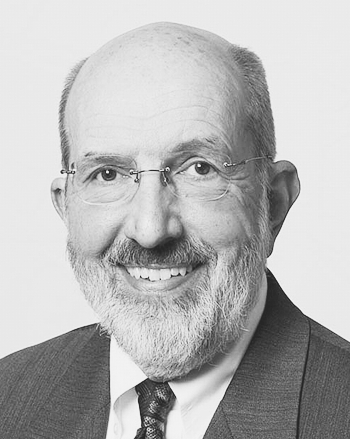
Douglas E. Metz
Undergraduate School & Major: Capital University, Political Science
Law School: The Ohio State University
Why did you choose to become a lawyer?
Because I was doing poorly as a chemistry major.
What is your fondest memory of practicing law?
The wonderful association I had with Jim Robison, John Curphey, and Michey O’Connell.
Who have you practiced with through the years?
Robison, Curphey & O’Connell exclusively.
What are your non-law related interests or activities?
Working out, trying to stay healthy, and enjoying our grandchildren.
Is there any advice you would like to pass along?
Be an advocate of Toledo; it’s a wonderful city to live in and to practice law.
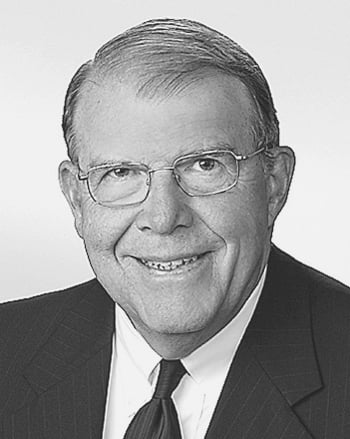
Donald M. Mewhort, Jr.
Undergraduate School & Major: Duke University, AB in Accounting
Law School: Duke University
Why did you choose to become a lawyer?
Accounting was boring and law was a chance to compete (with rules).
What is your fondest memory of practicing law?
Sitting second chair to Jack Hackett through many trials in State and Federal courts.
Who have you practiced with through the years?
All my years in the practice have been with Shumaker, Loop & Kendrick, including a summer clerkship.
What are your non-law related interests or activities?
Reading, following sports of all kinds and spending time with grand and great grandkids.
Is there any advice you would like to pass along?
Follow on of Stephen Covey’s The 7 Habits of Highly Successful People: “Seek first to understand, then to be understood.”
Barry E. Savage
Undergraduate School & Major: University of Michigan, Economics
Law School: University of Michigan
Why did you choose to become a lawyer?
Urging of my parents. In my senior year of High School, (Maumee High) our Civics class spent a morning at Toledo Municipal Court watching the Criminal Court. Young Bob Franklin was the Prosecutor and guided us through the court proceedings. This was my first contact with the legal side of life and I was impressed by Bob Franklin’s presentation of the court. Needless to say it was “eye opening” and really started my interest in the legal profession.
What is your fondest memory of practicing law?
After sixty (60) there are a lot of memories and I shall share a few. In 1973, a bank I was representing asked me to pursue a $200,000 claim against an insolvent Ford auto dealer in Port Clinton. The Judge in Port Clinton was Judge Stahl, who we could be characterized as eccentric and was known for his different views, he openly referred to the Court of Appeals as “three blind mice.” The dealer was out of trust for about 35 new Fords, sold cars but did not pay the bank for money borrowed to finance his purchase of the cars. He got duplicate titles by calling the assembly plant saying that when they delivered the cars he did not receive titles and the assembly plant would provide him with titles to deliver to the purchasers, which is where this situation went from bad to worse.
I talked to several Ford employees about this problem but they all, to protect their jobs, claimed no knowledge of the problem and were not helpful. Out of frustration, I decided as a last resort I would, as a long shot, write a letter to the then President of Ford, Lee Iaccoca. Thinking I had nothing to lose, I mentioned the names of all employees I had contact with and their stated position on the subject. It wasn’t but a few days that I received phone calls from some of the employees mentioned in the letter that I knew then that the letter had been read by Iaccoca. One of the employees who was most upset was the number 3 or 4 guy at Ford, after Henry Ford and Iaccoca who made threats to me.
A few weeks later the court had a pretrial on the civil case, where Ford appeared with counsel and their check book. Stahl confined us to the Jury Room and at the end of 2 days of negotiation we had a settlement and the Ford representatives opened their check book and wrote out checks to settle the claims of the banks who did not have cars to support their loans.
As a side note, the dealer was indicted and convicted of 53 counts of criminal conduct. The case had been assigned by Stahl to a visiting judge because Stahl was well acquainted with the dealer. No journal entry was even signed by any judge finding the dealer guilty based on the jury’s findings, the dealer was never sentenced and the case just died. That was Port Clinton under Judge Stahl.
In another case, a good friend of mine in the past, east side attorney Cliff Baker asked me to be co-counsel in a murder case in Bowling Green where Floyd Coller was the Judge, also was known as eccentric. The case involved a husband and wife living in a mobile home in Northwood where one Friday night a gun went off and the husband was killed. The wife was indicted for first degree murder and was in jail in the old Wood County Jail which left a lot to be desired. Cliff had never handled a murder case before. He assured me that he would handle all the preparation and that all I had to do was show up the day of trial.
The day of trial I showed up when Cliff was to fill me in on the case details. Dan Spitler was the newly elected prosecutor and this was his first big criminal case. Dan offered a plea to Manslaughter which Cliff quickly rejected. Coller called the case and the trial started. At that point Spitler dismissed the case which was something of a surprise to me and others. Cliff leaned over said to me, “he doesn’t have any witnesses.” Needless to say the Defendant was relieved.
I then asked Cliff how we were going to get paid. He said he took an assignment of a life insurance policy. Now he going to get the death certificate changed from the cause of death being murder to accidental and we would get double indemnity. For the amount of time I had involved I made the most money in this case that I had ever made in a criminal case. Lawyer Baker knew what he was doing all along.
Who have you practiced with through the years?
Started with Jack Schlageter in 1965, and we transferred to Boxell, Bebout, Torbert and Potter in 1968, and left BBT&P in 1973 and continued to practice as a solo attorney with associations with other attorneys following. Moved to Charleston, S.C. in 1993 to become corporate counsel for a company, but left that in 1994 and began commuting back to Toledo to renew my practice and have been practicing on a solo basis since, moving back to Toledo in 2002.
What are your non-law related interests or activities?
Boating, power and sail.
Is there any advice you would like to pass along?
Maintain your personal and professional integrity. No Excuses.

James F. White, Jr.
Undergraduate School & Major: Princeton University, Political Science
Law School: The Ohio State University (JD), New York University College of Law (LLM in Taxation)
Why did you choose to become a lawyer?
College friends encouraged me to do so. Thought it would be helpful in running the family business.
What is your fondest memory of practicing law?
Association with great partners and associates at Shumaker, Loop & Kendrick and mentoring young associates. Winning my first tax case against the IRS.
Who have you practiced with through the years?
Shumaker, Loop & Kendrick including Don Mewhort, Jr. and Rolf Scheidel. Enjoyed law school experience with Richard Ellenberger and Douglas E. Metz as classmates.
What are your non-law related interests or activities?
Being with family members and sitting on boards of community organizations. Playing golf and traveling.
Is there any advice you would like to pass along?
Be involved in our community to help make a difference.